

If you’re a CMO, marketing manager, or local advertiser trying to decide between digital vs static billboards, you’re not alone.
The conversation around digital billboard vs traditional billboard advertising has only intensified in 2026. Digital screens are everywhere. Programmatic buying is growing. Data tracking is more advanced than ever.
But static billboard advertising hasn’t disappeared — and for good reason.
So which format is right for your brand, your budget, and your audience?
This guide breaks down the pros, cons, costs, flexibility, and ROI considerations of digital vs static billboards — with real-world scenarios to help you choose confidently.
Understanding the Two Formats: Digital and Static Billboards at a Glance
Before we compare performance, let’s define the formats.
What Is Static Billboard Advertising?
A static billboard is the traditional printed vinyl display mounted on a structure and visible 24/7 for a contracted period (typically 4–12 weeks).
Creative remains constant throughout the campaign. Your brand owns 100% of the impression share on that face.
Common use cases:
- Brand awareness
- Long-term campaigns
- Consistent geographic presence
- Community visibility
What Is Digital Out-of-Home (DOOH) Advertising?
Digital billboard advertising falls under the broader category of digital out-of-home advertising (DOOH). These are LED screens that rotate multiple advertisers on a timed loop.
With DOOH vs billboard comparisons, the main difference is flexibility and dynamic content capability.
Digital boards allow:
- Creative swaps in minutes
- Dayparting (different ads at different times)
- Weather triggers
- Countdown timers
- Event-based messaging
- Programmatic buying integrations
According to industry insights published by CityVision, DOOH campaigns increasingly integrate mobile data and audience analytics to improve targeting precision and engagement tracking. In addition to digital and traditional billboards, you may also want to consider bulletin vs. poster billboards.
Digital Billboard vs Traditional Billboard: The Core Differences
Here’s a simplified billboard format comparison:
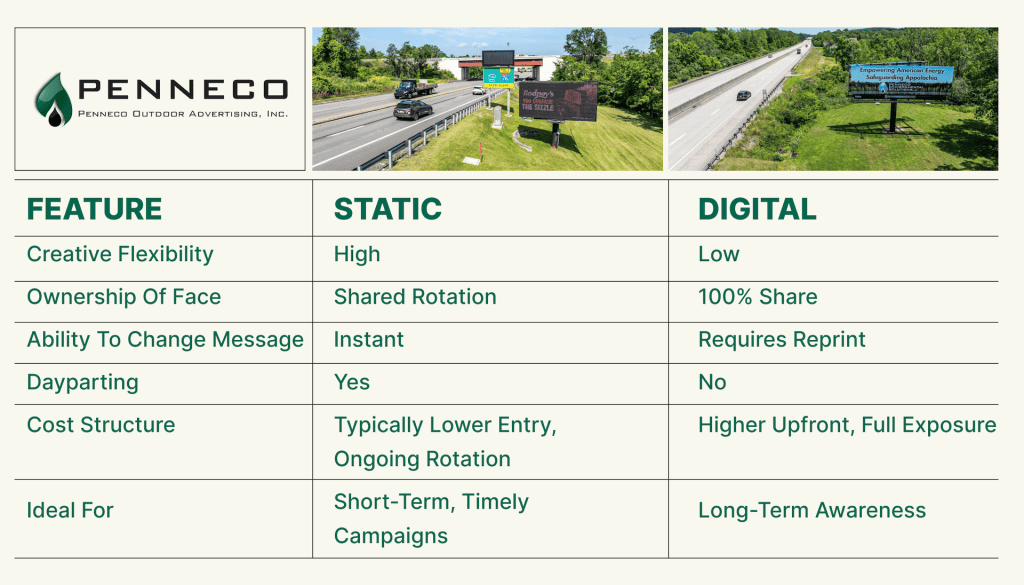
The right answer depends on your campaign goals — and that’s where our team comes in. At Penneco Outdoor Advertising, we help brands identify the ideal mix of digital and static placements based on objective, audience, geography, and budget.
With more than 30 billboard locations and over 120 faces, Penneco is the largest locally owned and operated outdoor advertising partner in the region. But more importantly, we’re locally focused — bringing deep market knowledge, strategic placement insight, and hands-on support to every campaign.
Static Billboard Benefits: Why Traditional Still Works
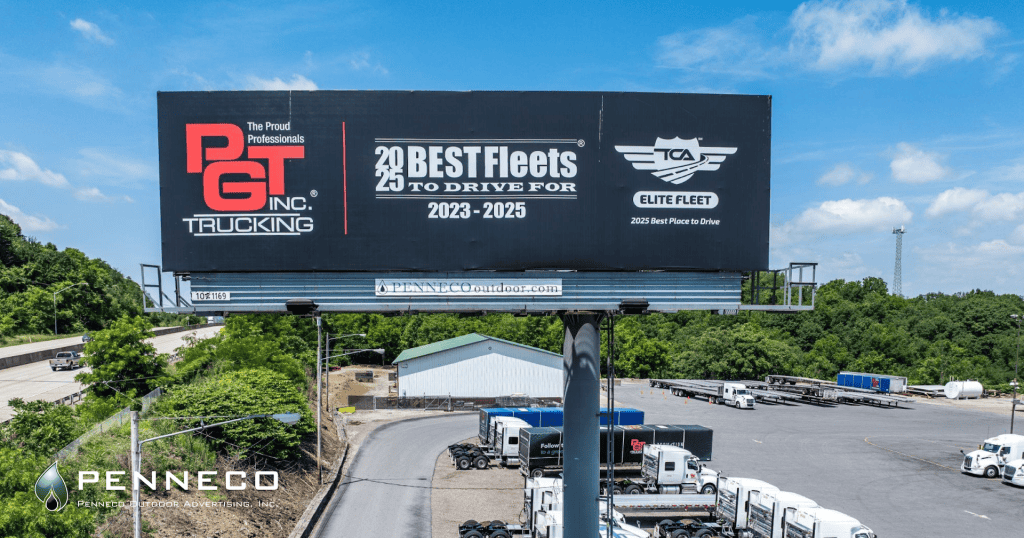
Despite the surge in digital out-of-home advertising, static billboard benefits remain strong — especially for sustained brand visibility.
1. Complete Share of Voice
Your brand is the only advertiser on the board.
That means:
- No message competition
- No rotation dilution
- Maximum repetition
2. High Recall Through Consistency
Research compiled by Forty7 Media shows that repetition is one of the strongest drivers of outdoor advertising recall. Static billboards reinforce brand memory because drivers see the same message every day.
In fact, static billboard recall rate remains competitive, especially for local businesses running 8–12 week campaigns.
3. Strong Local Presence
If your goal is to “own” a corridor in Western Pennsylvania, static can establish dominance. For many brands running billboard advertising in Pennsylvania, this long-term presence builds trust.
4. Simple Creative Strategy
With static, you design one strong message and let repetition do the work. No rotating variations required.
DOOH vs Billboard: Where Digital Excels
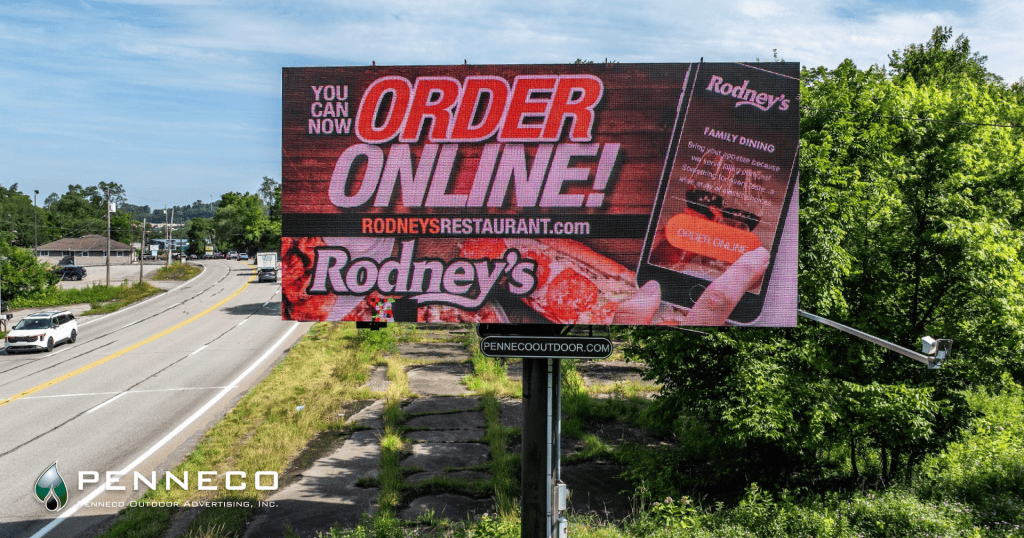
Digital billboard engagement rate is rising — and for good reason.
1. Real-Time Flexibility
Need to update pricing? Announce a flash sale? Promote a playoff game tonight?
Digital wins.
Campaigns can change in minutes without production costs.
2. Dayparting & Targeting
A restaurant can:
- Promote lunch specials 10am–2pm
- Happy hour 4pm–6pm
- Late-night delivery after 9pm
That’s simply not possible with static.
3. Data Integration
According to industry comparisons published by MediaFinch, digital boards offer advanced impression tracking, scheduling control, and integration with campaign analytics platforms.
This makes digital billboard advertising appealing to data-driven marketing teams.
4. Lower Entry Investment
Because advertisers share rotation, digital campaigns can sometimes have a lower entry cost than securing an entire static face.
However — and this is important — exposure is also shared.
Digital Billboard Cost vs Static Billboard Cost
Cost is often where CMOs pause.
Here’s the nuance:
- Static billboard cost: Higher upfront investment, but you own 100% of impressions.
- Digital billboard cost: Lower initial buy, but impressions are divided among rotating advertisers.
So the question becomes:
Are you prioritizing dominance or flexibility?
If brand saturation is your goal, static may generate stronger long-term ROI.If agility and campaign responsiveness matter more, digital may provide better strategic value.
Billboard Advertising ROI Comparison

Which format gives better ROI and engagement?
The honest answer: It depends on campaign intent.
Digital Often Wins For:
- Time-sensitive promotions
- Event marketing
- Multi-message testing
- Data-driven campaigns
Static Often Wins For:
- Brand building
- Geographic ownership
- Long-term campaigns
- Political or institutional messaging
According to effectiveness summaries shared by SignValue, both formats perform strongly when creative is simple, high-contrast, and message-focused.
The variable isn’t just format.
It’s strategy.
When Should You Choose a Digital Billboard Over a Static One?
Choose digital when:
- You need to update creative frequently
- Your message changes based on time or weather
- You want to test multiple versions
- You’re promoting short-term events
Digital excels in dynamic environments.
When Is a Static Billboard the Better Choice?
Choose static when:
- You want uninterrupted exposure
- Your brand needs authority and permanence
- You’re building awareness over months
- You want to dominate a key traffic corridor
For many brands, especially those focused on regional presence, static remains incredibly effective in 2026.
How Does DOOH Differ from Traditional Billboard Advertising?
Digital out-of-home advertising differs primarily in:
- Message rotation
- Creative flexibility
- Data integration
- Scheduling control
Traditional static billboard advertising differs in:
- Full visibility ownership
- Physical print production
- Long-term message consistency
The core objective — reach drivers at scale — remains the same.
Are Static Billboards Still Effective in 2026?
Yes.
While digital adoption is growing, static billboards continue to deliver strong recall and brand reinforcement, particularly in suburban and commuter-heavy corridors.
They’re not outdated, they’re strategic.
Which Billboard Is Better for Small Business?
Which billboard is better for small business owners?
If your budget is limited and your message changes frequently, digital may provide accessible entry and flexibility.
If you’re building brand recognition in one geographic area — for example, along a heavily traveled Pennsylvania route — static often produces stronger sustained impact.
The answer comes down to:
- Budget
- Campaign length
- Message complexity
- Growth stage
The Smartest Strategy? Combine Both.
Many high-performing brands don’t choose between digital vs static billboards.
They integrate both.
Example:
- Static boards establish constant brand presence.
- Digital board supports promotions, events, and timely messaging.
That layered strategy often creates the strongest billboard advertising ROI comparison results.
Making the Right Decision for Your Campaign
Choosing between digital vs static billboards isn’t about trends.
It’s about alignment.
Ask yourself:
- Is my campaign short-term or long-term?
- Do I need message flexibility?
- Am I building brand authority or driving immediate action?
- Do I want dominance or adaptability?
Your answers will point to the right format.
Explore Penneco Outdoor Billboard Formats
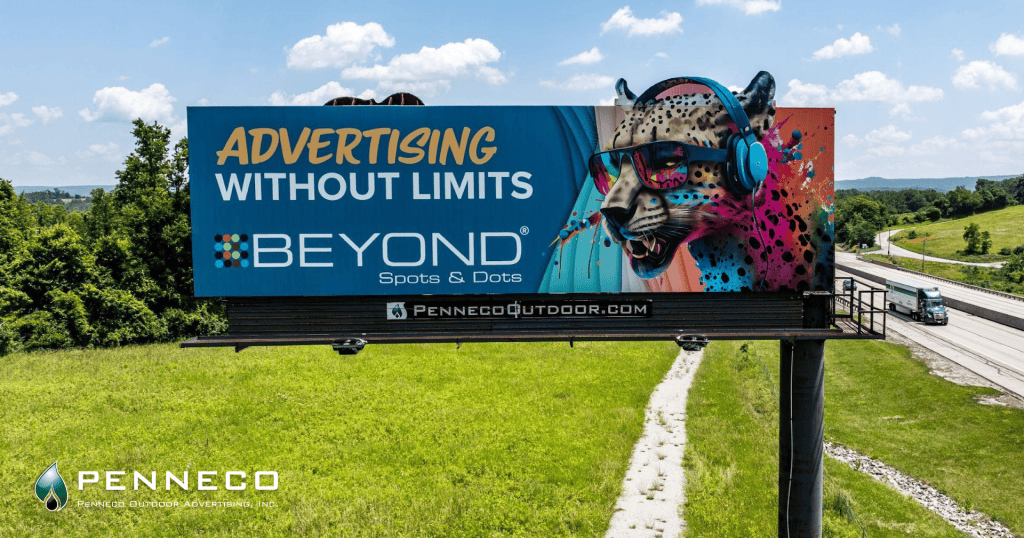
At Penneco Outdoor Advertising, we help brands evaluate the right mix of digital and static placements based on real traffic patterns, geographic targeting, and campaign goals.
Whether you’re considering DOOH vs billboard placements or planning long-term static billboard advertising in Pennsylvania, our team can walk you through:
- Location strategy
- Impression estimates
- Creative guidance
- ROI expectations
Explore our full range of Penneco outdoor billboard formats and learn more about how we measure campaign impact.
The right format isn’t universal.
It’s strategic.
And when chosen correctly, outdoor advertising remains one of the most powerful awareness drivers available in 2026.
Frequently Asked Questions
When should you choose a digital billboard over a static one?
When flexibility, dayparting, or short-term promotions are priorities.
Which format gives better ROI and engagement?
Both perform well — digital for agility, static for sustained recall.
What are the trade-offs?
Cost structure, creative flexibility, and share of exposure differ significantly.
How does digital out-of-home advertising differ from traditional billboard advertising?
Digital rotates messages and integrates data; static offers uninterrupted visibility.
Are static billboards still effective in 2026?
Yes — especially for long-term brand building.
Which billboard is better for small or local businesses?
It depends on budget, timeline, and message strategy.
Final Thoughts: Choosing Between Digital vs Static Billboards
At the end of the day, the digital vs static billboards decision isn’t about which format is newer — it’s about which format aligns with your campaign objective.
If your priority is flexibility, timed messaging, and short-term responsiveness, digital billboard advertising may be the right fit.
If your priority is geographic dominance, uninterrupted visibility, and long-term brand reinforcement, static billboard advertising continues to deliver measurable impact.
Many of the most effective campaigns in billboard advertising Pennsylvania combine both — leveraging static for consistency and digital for agility.
The strongest outdoor strategies aren’t reactive. They’re intentional.
And when format aligns with objective, ROI follows.Ready to evaluate the right mix for your campaign? Explore our Billboard Formats or connect with our team to build a strategy aligned with your goals.